Projects Speaking
Sharing what I've learned
The thing I do best is understand a problem well enough to know how software should solve it. More and more, people ask me to explain how.
Where I speak
I present regularly at NATSAP, the national association for therapeutic schools and programs, on technology, design and behavioral healthcare. I get asked to sit on industry panels and to consult with program teams working through their own technology decisions.
The talks change, but the subject rarely does: start with the people and the workflow, and the software gets a lot easier to get right. I've been the user, the builder and the executive, and I still think the user is the one worth listening to.
Featured talk
Transforming Treatment: A Guide in Using Technology to Improve Everything. Co-presented with Josh Gardner, Havenwood Academy.
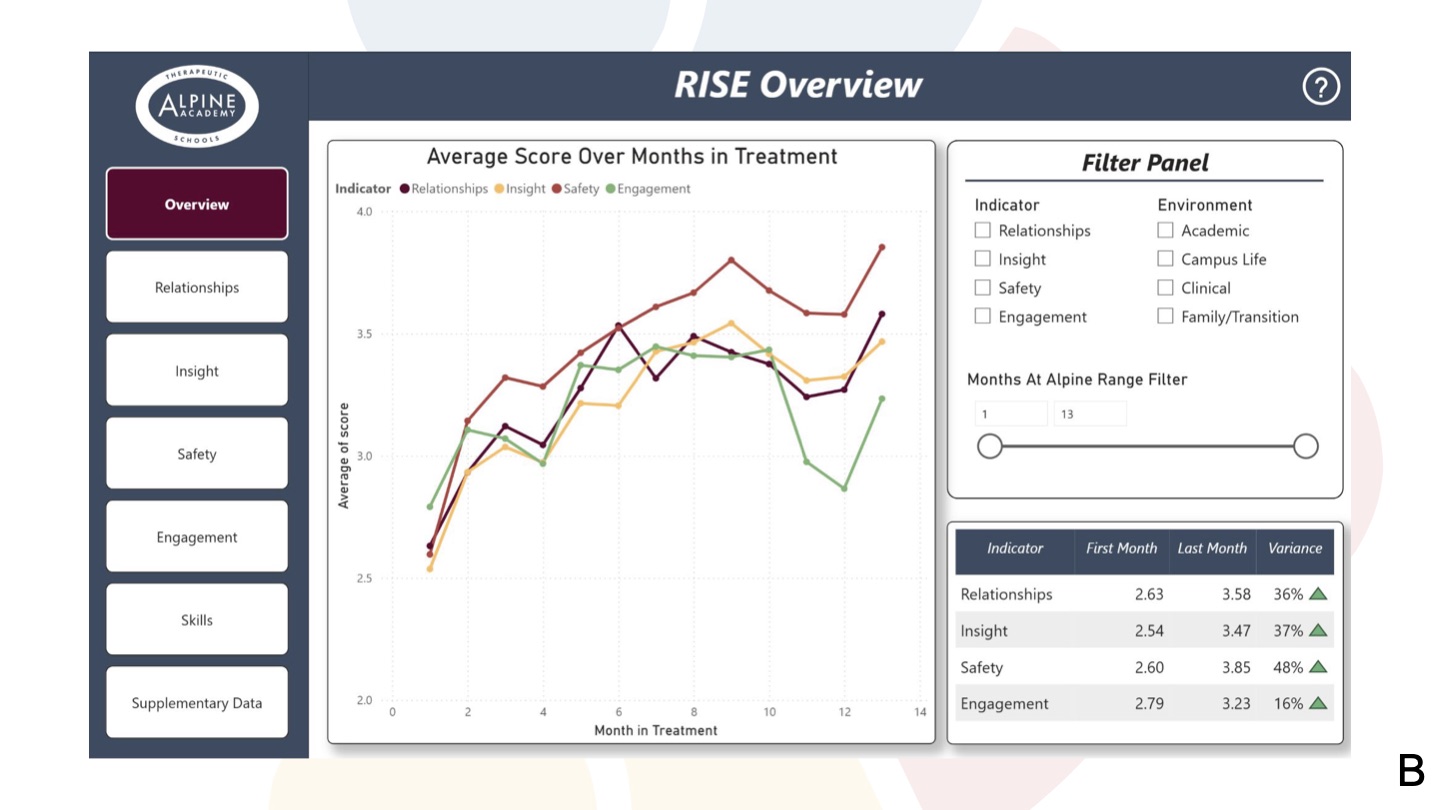
Six case studies from Havenwood Academy and Alpine Academy, each told the same way: the pain points, the likely causes, and the layers of technology and process we added until the problem went away. Parents blowing up at therapists. Shifts that ran differently depending on who was on. Family phone calls that kept getting missed. Departments that never saw each other's notes.
- Technology is Swiss cheese
- No single tool fixes a problem. Each layer has holes; stack enough of them and nothing gets through.
- What you chart on is what you care about
- When a shift gets a visible grade, the shift gets better. The Hawthorne effect is a design tool.
- Just-in-time information
- The right information, to the right person, at the right time and place, in the right format. Silos break down when nobody has to go looking.
- Pick the right tools
- The best-equipped programs win, but nobody needs an excavator for a home garden.
It closes with an open debate on AI in behavioral health: what it is actually good for today, where it isn't, and what programs want vendors like BlueStep to build next.
Slides
Click any slide to enlarge. Slides with student or staff details are left out.
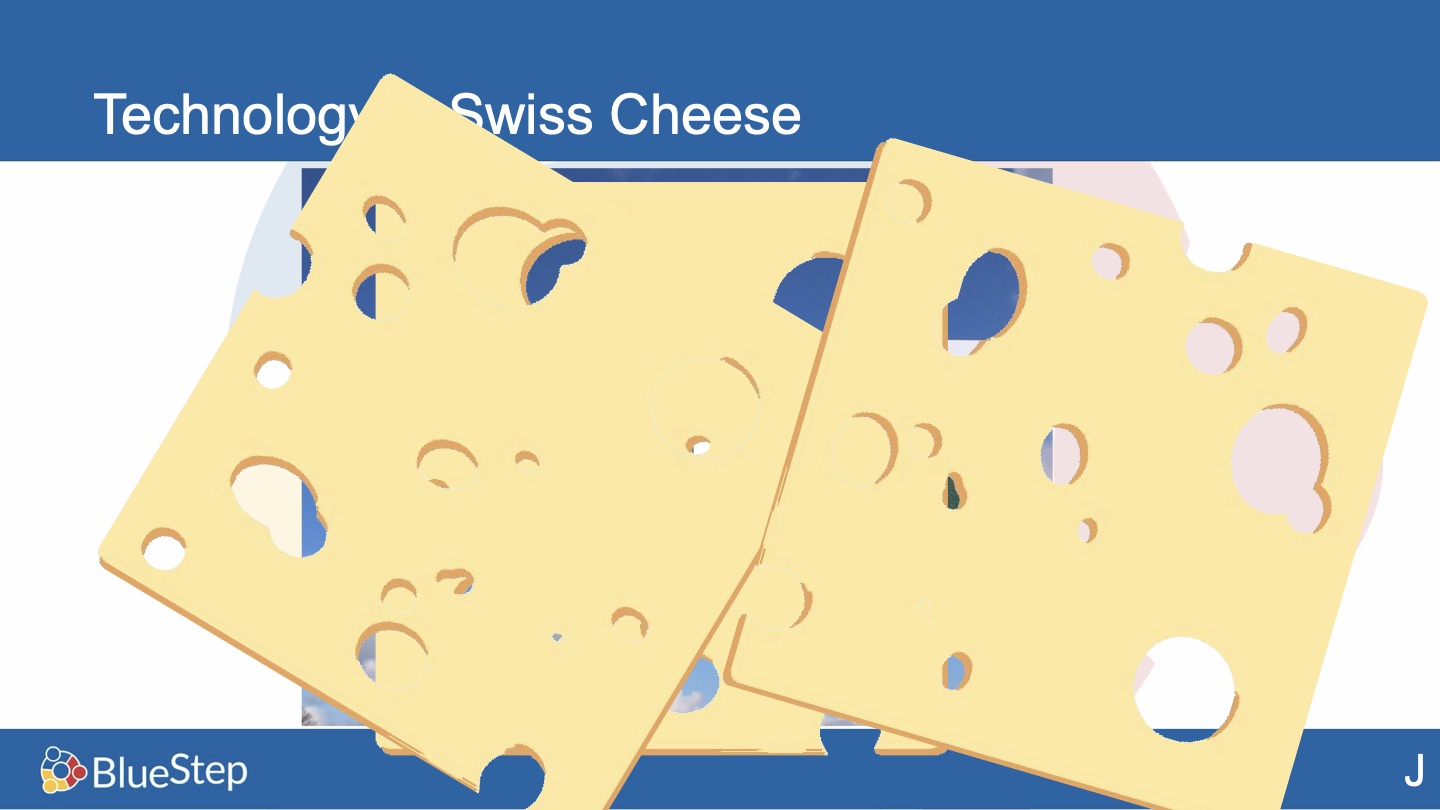
The thread through every case study: no single tool closes every hole, but the layers together do. 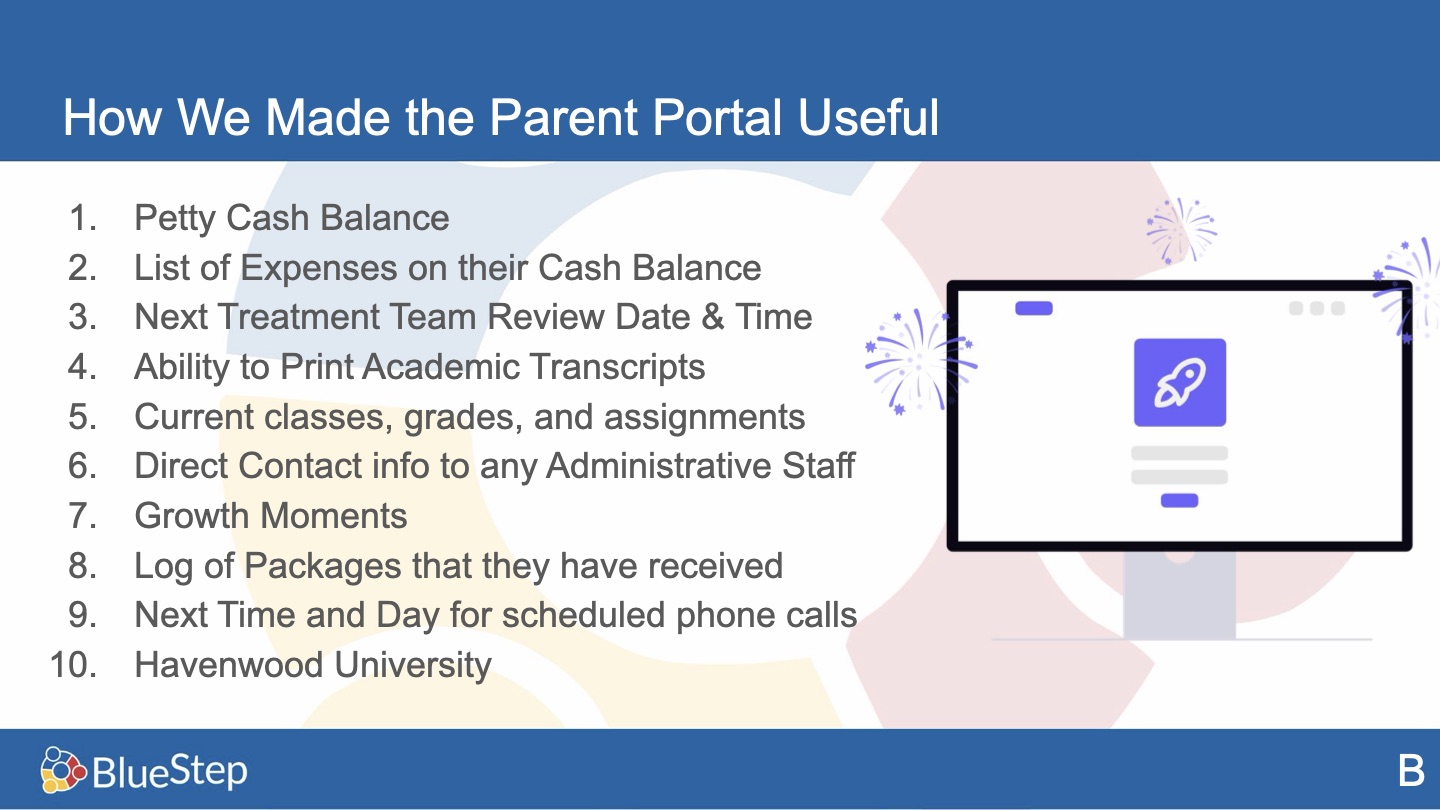
Case study 1: what we added to the parent portal so families could see into their child's treatment. 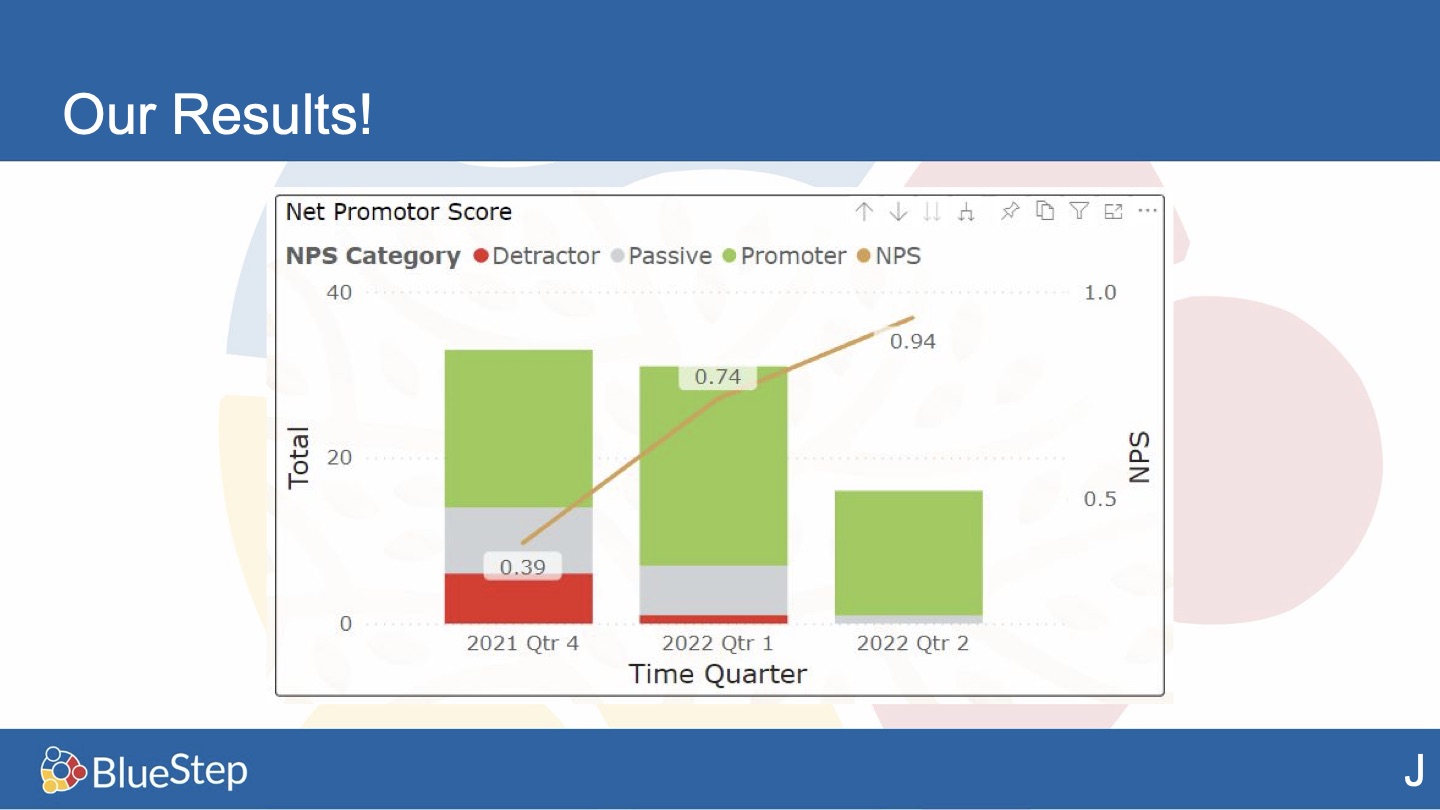
The result: parent Net Promoter Score went from 0.39 to 0.94 in two quarters. 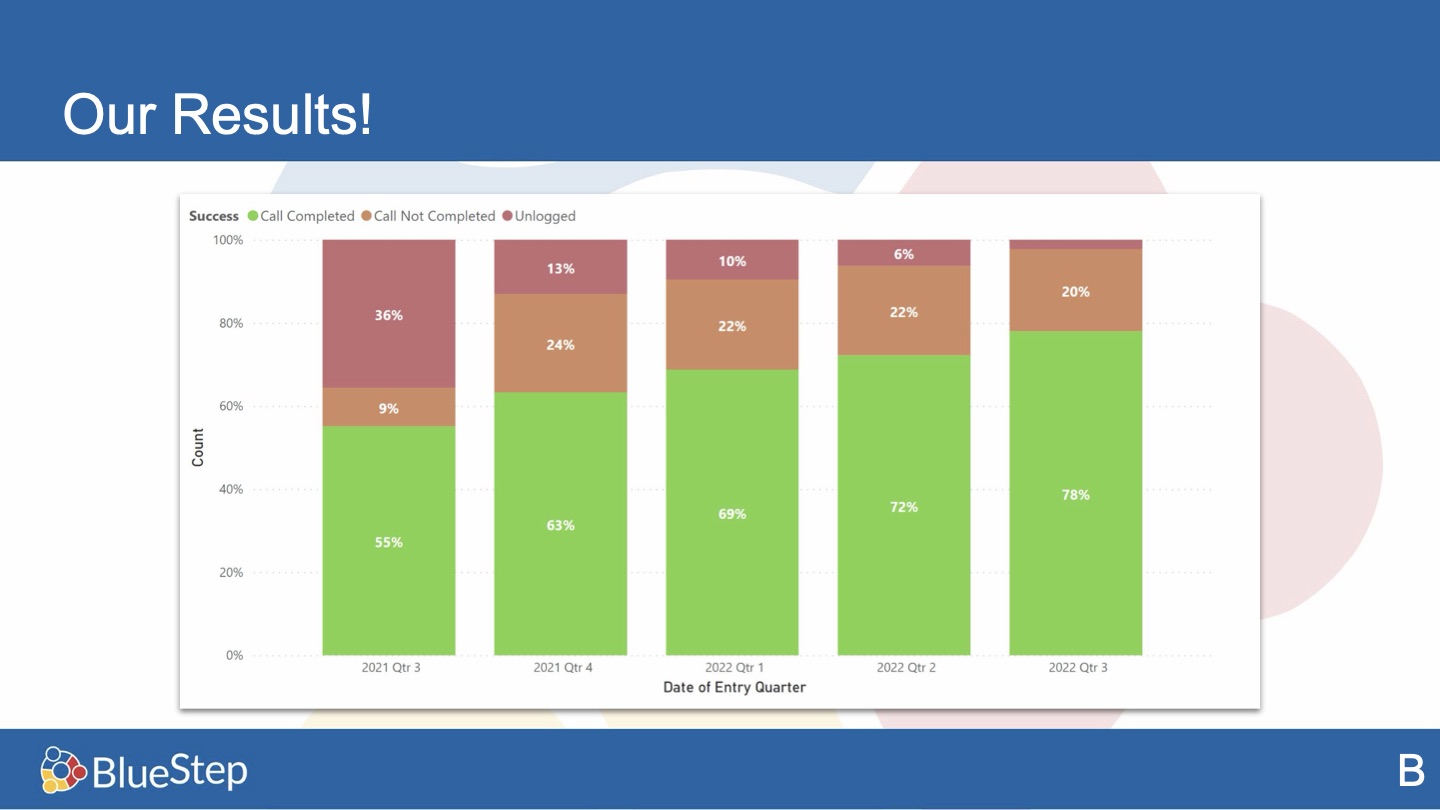
Case study 3: layered reminders and tracking until missed family phone calls nearly disappeared. 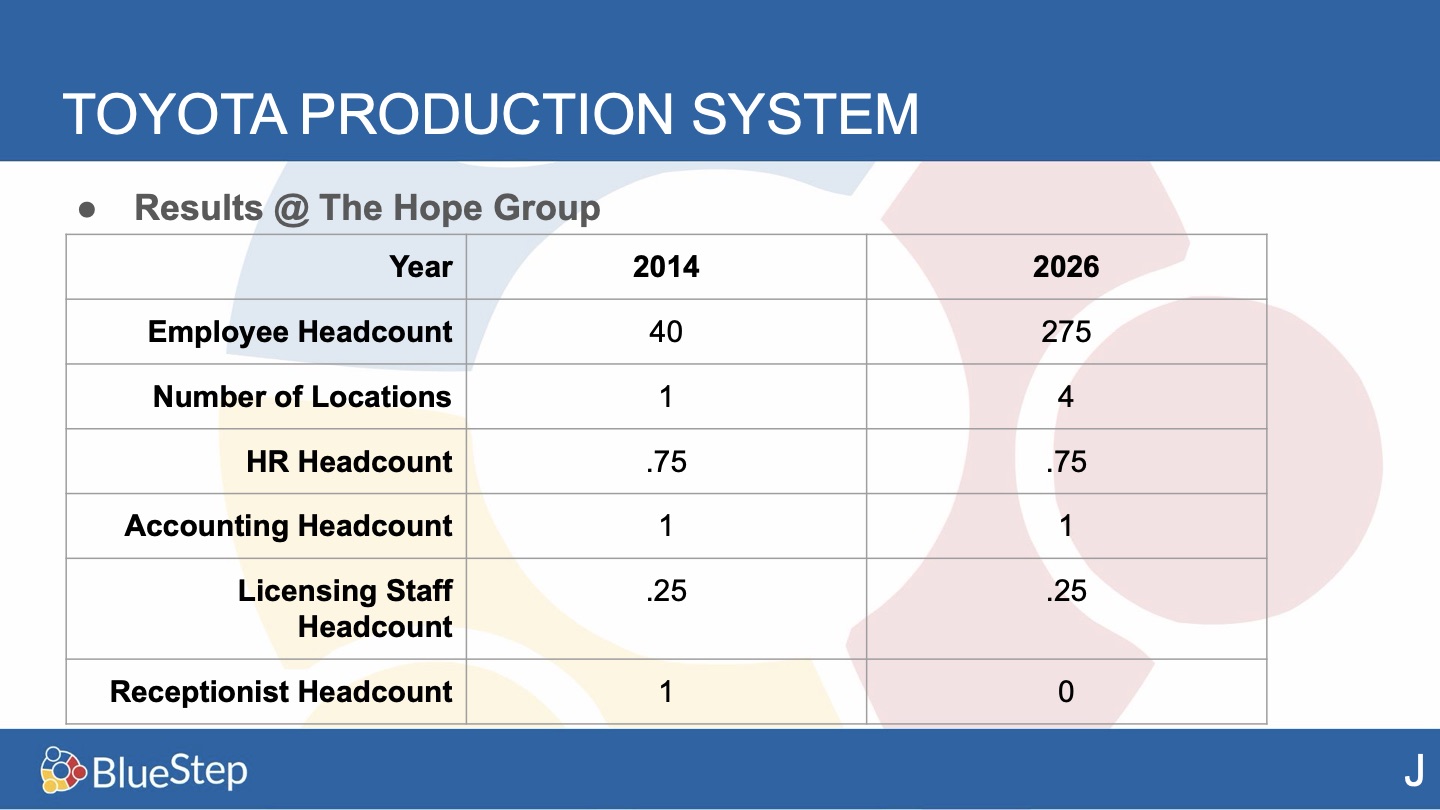
Case study 4: lean practices at The Hope Group. Seven times the staff, same back office.
Up next
Therapeutic Consulting Association, October 28, 2026
AI for the Business of Consulting. An interactive session for independent therapeutic consultants: practical, honest and HIPAA-aware. The thesis is the same one I build software around. AI should handle running the business, so people have more time for the work only they can do.